What is functional minimalism in a Scandinavian office?
The Scandinavian style is based on three pillars: minimalism, functionality and timeless design. In an office context, minimalism is a design methodology, not just an aesthetic choice. A Scandinavian office is characterised by a space free of unnecessary elements. This fundamental principle is critical to supporting concentration. Interiors must be tidy, as clarity and calmness of the environment are essential for intellectual work.
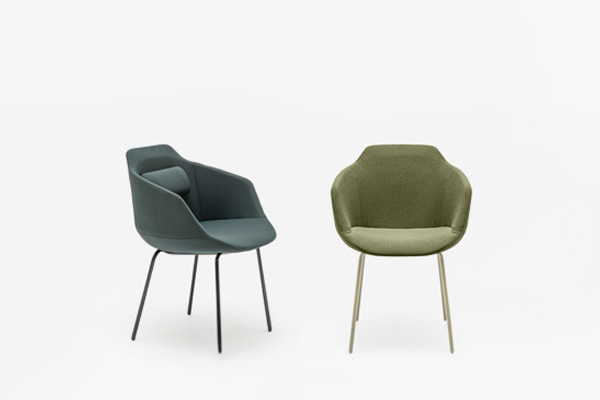
In accordance with design principles that minimise cognitive load, the removal of unnecessary decorations and excess objects directly promotes concentration. Furniture, including seating, is designed to be lightweight and not overwhelm the space. This aesthetic simplicity is a physical manifestation of the requirement to reduce visual distractions, which is a key element of modern ergonomics. Desks and chairs should not dominate visually, but blend harmoniously into the orderly environment, thus supporting effective performance.

What colours and materials should you choose for a Scandinavian-style office?
Colours in the Scandinavian style are essential for the visual design of the space. Natural colours dominate, with white, grey and black at the forefront. White forms the basis of the design, blending well with light-coloured floors, ceilings and window frames. The light palette not only attracts attention but, above all, has a positive effect on the decor, visually enlarging the interior. This effect makes even small office spaces seem much more spacious.
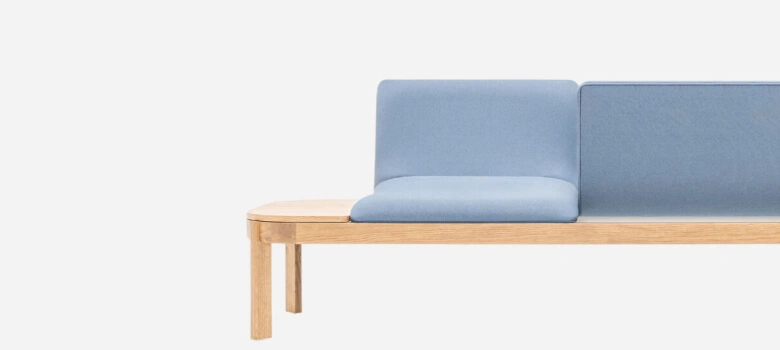
The choice of materials in this style is closely linked to nature. The main raw material is wood, both solid and veneered, often combined with metal. Wood is used not only in furniture but also in seating, bringing warmth and a natural look to the interior. There are collections of solid wood furniture available on the market, such as oak chairs, which fit perfectly into this aesthetic.
How does lighting affect productivity in the office?
A characteristic feature of Scandinavian style, transferred from regions with limited sunlight, is the requirement for bright and well-lit interiors. In an office, where comfort and work efficiency depend on visual conditions, adequate lighting of the desk and the entire room is crucial. Being in a well-lit environment reduces eye strain and helps maintain concentration.
When choosing seating, the synergy between aesthetics and the function of light should be appreciated. Light colours and simple furniture forms reflect light, maximising its diffusion and enhancing the impression of spaciousness. According to Holistic Ergonomics analysis, light is not just a decorative element, but a dynamic force that affects perception, mood, energy levels and overall health. Therefore, seats in light colours actively support the lighting environment of the office.
Aesthetic characteristics of Scandinavian-style office seats
| Criteria | Aesthetic requirement | Functional purpose |
| Form | Minimalist, geometric or organic, lightweight construction | Preventing the space from feeling overwhelmed, promoting order |
| Colour scheme | Dominance of white, grey, black and natural shades | Optical enlargement of the interior, reflection of light |
| Materials | Wood (solid or veneer), metal, natural fabrics (wool, linen) | Warming up the interior, introducing biophilic elements |
What is holistic ergonomics in Swedish design?
Authentic Scandinavian design, especially in its Swedish form (e.g. Kinnarps), is based on the concept of Holistic Ergonomics. This is a state in which all elements of the working environment – from chairs, through acoustics and lighting, to the social and organisational atmosphere – come together to form a coherent whole. Unlike traditional ergonomics, which focuses on individual products, the holistic model assumes that the whole is greater than the sum of its parts.
The goal is to create a space where employees feel welcome, safe, inspired, motivated and healthy. Success in a Scandinavian office depends on the integration of these diverse factors. An office chair, although physically just one element, must be designed to fit into a broader ecosystem that supports movement, concentration and well-being.
What active sitting mechanisms support employee health?
The central tenet of Scandinavian ergonomics is the rejection of static sitting. It is recognised that the best posture is ‘the next one’, and that the working environment must constantly encourage and enable movement. Movement is considered key to optimising human performance and improving physical and mental health.
That is why the minimalist form of the Scandinavian task chair must conceal advanced engineering technology, which is a characteristic feature of Swedish design. Managers should avoid visual imitations and focus on hidden mechanisms:
- FreeMotion®: A revolutionary mechanism, used for example in Capella X chairs, works through an unlocked seat that generates balanced micro-movements. This is key to reducing harmful static load and improving blood circulation. This type of active sitting is promoted as the future of ergonomic seating.
- Synchrone™: Enables smooth synchronisation of seat and backrest movements, with the option of adjusting the resistance to suit the user's weight. The user can lock the chair in any position for maximum comfort.
- FreeFloat™: This mechanism supports movement by allowing the seat and backrest to move independently, following the user. The seat can be tilted forwards and backwards, and the level of resistance adjusts to the user's body weight.
The availability and use of such mechanisms is directly related to business objectives. By improving circulation and reducing the risk of injury (health), these mechanisms lead to increased concentration and, as a result, higher productivity and efficiency.
Comparison of innovative ergonomic mechanisms for active sitting
| Mechanism | Functionality | Ergonomic benefit |
| FreeMotion® | Seat without lock, generating balanced micro-movements | Active posture, improved circulation, reduced static load |
| Synchrone™ | Smooth synchronisation of seat and backrest movement | Comfort and body support, can be locked in the preferred position |
| FreeFloat™ | Independent movement of seat and backrest | Maximum freedom to change position, follows the user's natural movement |

How to check if an office chair has the right adjustment options?
In a modern office, especially in flexible models (hot-desking), office chairs must be versatile and easy to use. Seats must be easy and intuitive to adjust, as one chair may be used by several employees. Reputable manufacturers design their chairs so that their dimensions and adjustability meet the needs of 99% of users.
Chairs must offer smart technology that allows them to be adjusted to suit the desk and individual requirements. Features such as adjustable armrests and headrests are essential accessories that further improve ergonomics and allow for a comfortable, variable sitting position.
Relaxation and collaboration zones: the role of soft seating in the Scandinavian office
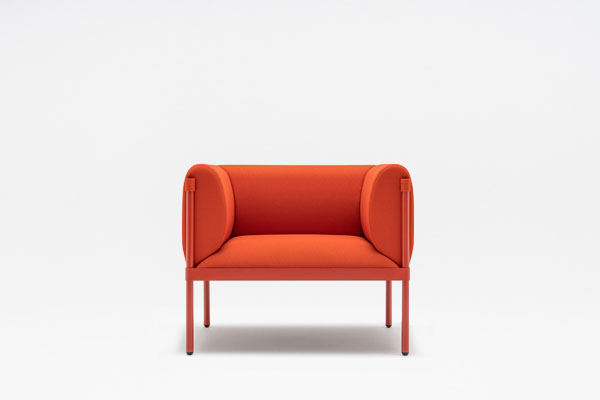
In Scandinavian offices, relaxation and collaboration zones equipped with soft seating are a key element in promoting well-being and creativity. The need to take breaks from intensive desk work requires the use of a variety of upholstered seating, such as office sofas, upholstered armchairs, modular furniture, ottomans and pouffes.
The variety of shapes, colours, fabrics and textures in these areas is designed to stimulate and support creative processes. Polish design fits perfectly into this aesthetic, offering minimalist and organic forms, often made of solid wood (e.g. LOBI and HOYA sofas or the FOX armchair). Collections such as Snap (Profim), designed with the well-being of users in mind, show how design should serve functionality in modern workspaces.

What functional accessories should be used in Scandinavian interior design?
In Scandinavian interior design, accessories are not random: they are meant to add warmth to a room, but above all, they serve an infrastructural purpose. Minimalist interiors, dominated by hard, light-coloured and light-reflecting surfaces (walls, wood), have a natural tendency to generate reverberation. The use of large upholstered surfaces and textiles is essential to maintain low noise levels. Soft carpets made of natural fibres not only break up the austerity of the aesthetics, but also have a practical significance: they improve acoustics and eliminate echoes. The introduction of these elements is a prerequisite for meeting the requirement of holistic ergonomics, which consists in minimising auditory disturbances.
In line with the philosophy of combining the office with nature (biophilic design, an element of holistic ergonomics), potted plants are essential, preferably in simple pots. Plants improve the microclimate and have a positive effect on concentration and well-being. The whole is complemented by textiles (blankets, linen or wool cushions), which give the interior a soft feel while maintaining its consistent character.
Technical specifications and fabric durability: how to choose a material that will last for years?
The durability criterion for upholstery is the least visible but most critical factor when choosing office seating. The commercial environment exposes furniture to heavy wear and tear, often for many hours and by different users. The durability standards for upholstery fabrics used for home furniture (often below 20,000 Martindale cycles) are inadequate for the office. Choosing highly resistant materials is a strategic decision that minimises operating costs associated with premature renovation or replacement.

What is the Martindale test and what should you look for when choosing a fabric?
The Martindale test is an internationally standardised method for assessing the abrasion resistance of fabrics, regulated by ISO 12947. The test simulates the natural wear process by rubbing the fabric with combed wool in a figure-eight pattern. The result, given in cycles, indicates the number of rubs before significant signs of damage to the fabric appear.
It is necessary to comply with specific durability thresholds depending on the intended use of the seat:
- for relaxation areas, waiting rooms and moderate use: a fabric guaranteeing a minimum of 40,000 cycles is required;
- for intensive task seating (swivel chairs): due to extreme and continuous stress, the required level of durability is much higher and should be well over 100,000 cycles.
How does foam hardness affect the durability of upholstery?
The degree of hardness of upholstery foam has a direct and critical impact on the required durability of upholstery fabric. Harder foam, which is often necessary in ergonomic task chairs for optimal posture support, offers greater resistance and generates stronger tension and friction on the fabric during use.
This phenomenon leads to a key conclusion: since an ergonomic task chair, in line with the principles of active sitting, must use hard foams to maintain correct posture, the fabric must exhibit maximum abrasion resistance (>100,000 cycles). Failure to meet this technical requirement results in premature wear of the upholstery, which ultimately changes the feel of the seat and compromises the long-term effectiveness of the chair's ergonomic function. High fabric durability is therefore not only a matter of aesthetics, but a key requirement for maintaining health-supporting functionality.
Upholstery fabric durability standards (Martindale test, ISO 12947)
| Type of use / location | Minimum Martindale cycle requirement | Justification for load |
| Private use (solid upholstery) | 10,000 - 25,000 | Standard domestic use |
| Relaxation areas/waiting rooms | Minimum 40,000 | Moderate to intensive public use |
| Workstations (task seating) | Well over 100,000 | Extremely intensive, daily, many hours of use; hard ergonomic foams |
How to choose the perfect seating for a Scandinavian office?
The final choice of seating for a Scandinavian-style office should be based on a holistic assessment of functionality, technical aspects and aesthetics. Investing in Scandinavian design is a long-term investment in well-being and productivity.
Holistic checklist for choosing chairs
| Chair category | Functional criteria | Technical criteria | Aesthetic criteria |
| Task chairs (Task Seating) |
Active sitting mechanisms (FreeMotion®, Synchrone™). Ease and range of adjustment. | Upholstery fabric durability: > 100,000 Martindale cycles. Hard foams to support posture. | Lightweight, minimalist form that does not overwhelm the space. |
| Leisure seating (Soft Seating) |
Modularity (in collaboration zones). Comfort and position variability. Acoustic support (large upholstered surface). | Upholstery fabric durability: > 40,000 Martindale cycles. | Organic shapes. Natural materials (wood, wool, linen). |
Which manufacturers should you choose and what certifications should you look for?
It is recommended to focus on suppliers who combine historical experience in Scandinavian design with ergonomic innovations:
- technological leaders (Sweden): companies such as Kinnarps set the standard for Swedish design and Holistic Ergonomics. Their products, characterised by durability and innovative mechanisms (e.g. Capella X), are the optimal choice for task stations;
- Polish design: Polish manufacturers, including Profim (ergonomic chairs and soft seating, e.g. the Snap collection) and suppliers of Scandinavian-style furniture made of solid wood (e.g. LOBI, HOYA), offer high-quality workmanship while embracing the aesthetics of minimalism and functionality;
- certificate verification: in addition to durability standards (ISO 12947), it is essential to ensure that the selected products have the fire resistance certificates required in commercial facilities and environmental declarations that confirm the sustainable life cycle of the product, which is in line with Scandinavian ethics.
Summary: a long-term investment in Scandinavian design
Scandinavian-style office chairs represent the Lagom philosophy, which strives for optimal balance and longevity. Choosing an office chair in this aesthetic is a successful investment, provided that aesthetic simplicity is not confused with functional simplicity.
Choosing seating for a Scandinavian office requires a rigorous technical approach. This means selecting task chairs with the highest durability parameters (over 100,000 Martindale cycles) and advanced mechanisms that support movement and health (Holistic Ergonomics). At the same time, soft seating areas must act as acoustic and environmental compensators, warming up the interior and minimising distracting auditory and visual factors. Conscious adherence to these principles guarantees the creation of a working environment that is effective, aesthetically consistent and maximally conducive to long-term concentration.