Executive summary and strategic justification for investment
Noise in a modern open-plan office is not only a comfort issue, but also a productivity issue. In this chapter, we explain why investing in the right acoustic booth brings measurable business benefits.
Why is noise in open-plan offices a serious problem for employers?
Although modern open-plan work environments promote communication and integration, they generate unavoidable noise, which is a proven stress factor and cause of decreased employee concentration. Studies show that noise reduction significantly improves the mental and physical well-being and productivity of staff. The concentration achieved in a quiet working environment translates directly into the quality and time of task completion, which is evident in the reported increase in productivity in organisations that have decided to improve their acoustics.
Noise is a documented stress factor that affects not only productivity but also employee health. Prolonged exposure to noise leads to increased cortisol levels, mental stress and poor sleep quality, which has a cascading effect on the overall performance of the organisation.
What is an acoustic booth and what functions does it serve in the office?
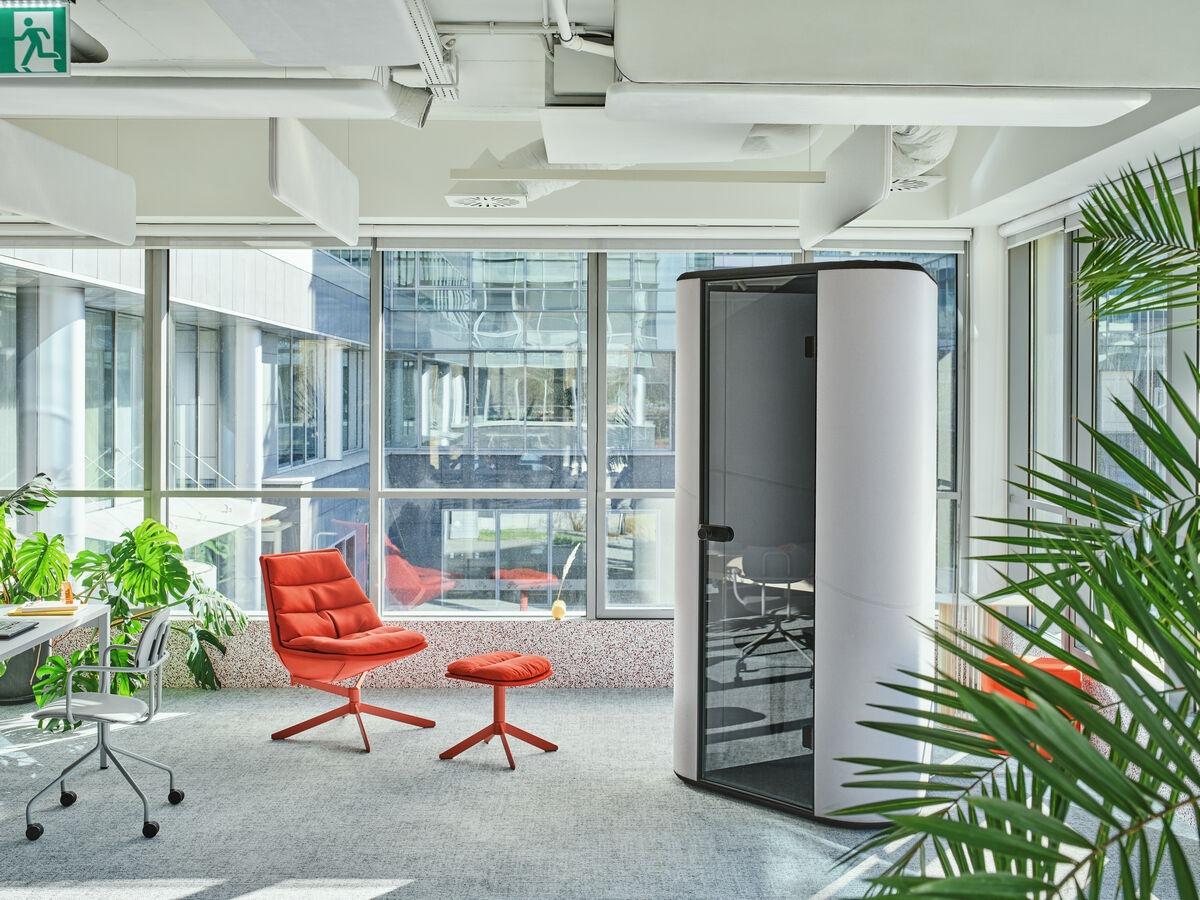
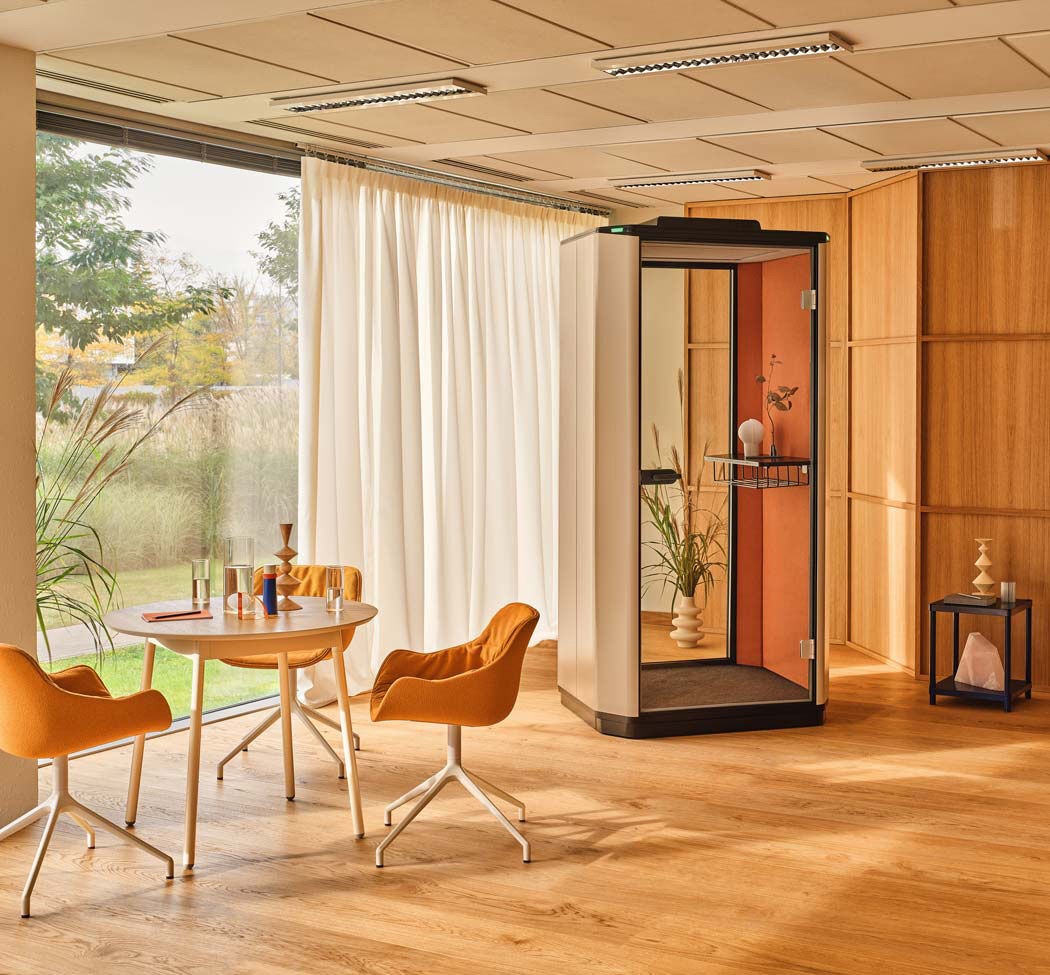
An acoustic booth is an airtight, mobile structure that provides a soundproofed and private workspace. Its primary function is to ensure silence and privacy during work or conversations. These spaces are essential for conducting confidential telephone calls and video conferences, thus guaranteeing the highest level of information confidentiality.
It should be emphasised that an acoustic booth is not only a piece of office equipment, but also critical infrastructure that supports information security and key business processes. The ability to conduct private conversations in booths significantly reduces the risk of potential disclosure of confidential data (e.g. in the context of GDPR requirements), making the purchase of a booth an investment in risk management, not just furniture. Furthermore, features such as video conferencing and deep work support mean that booths fit directly into IT infrastructure and human resources strategy.
What is the return on investment (ROI) for acoustic booths?
The ROI from investing in acoustic booths is multifaceted. In addition to increased productivity and improved employee well-being, cost-effectiveness compared to alternatives is a key factor. Acoustic booths, especially multi-person models, are often used as a flexible alternative to building traditional small meeting rooms. They offer the possibility of quick space reconfiguration and are installed at a fraction of the cost and time required for construction work.
The improvement in working comfort provided by booths translates into greater well-being and higher employee satisfaction. This is an important factor in talent retention strategies and building a positive employer image. Investing in advanced acoustics is therefore an integral part of strategic workplace management.
Typology and functionality of acoustic booths
The selection of an appropriate acoustic booth should be preceded by an audit of the actual use of space and the specific nature of work in the office. Different types of booths are adapted to different operational scenarios.
What types of acoustic booths are available on the market?
Booths available on the market are usually classified according to the number of people who can work comfortably in them:
Single-person booths (Phone Booths / Focus Pods)
These smallest units are designed for short phone calls, uninterrupted video conferencing and work requiring maximum concentration (so-called deep work). Their main role is to suppress noise at the individual level. Single-person booths are the ideal solution for employees who need to make frequent, short private calls or who require deep concentration for tasks that demand increased focus.
Two-person booths (Small Meeting Pods)
These are ideal for quick 1:1 meetings, mentoring sessions or two people working together on online documents. An example is the Treehouse 2-person acoustic booth (TH 2), which has an approximate net price of PLN 16,458.00. Such products provide sufficient space for two people while remaining mobile and easy to install.
4-person booths and larger (Huddle Rooms / Mini-conference rooms)
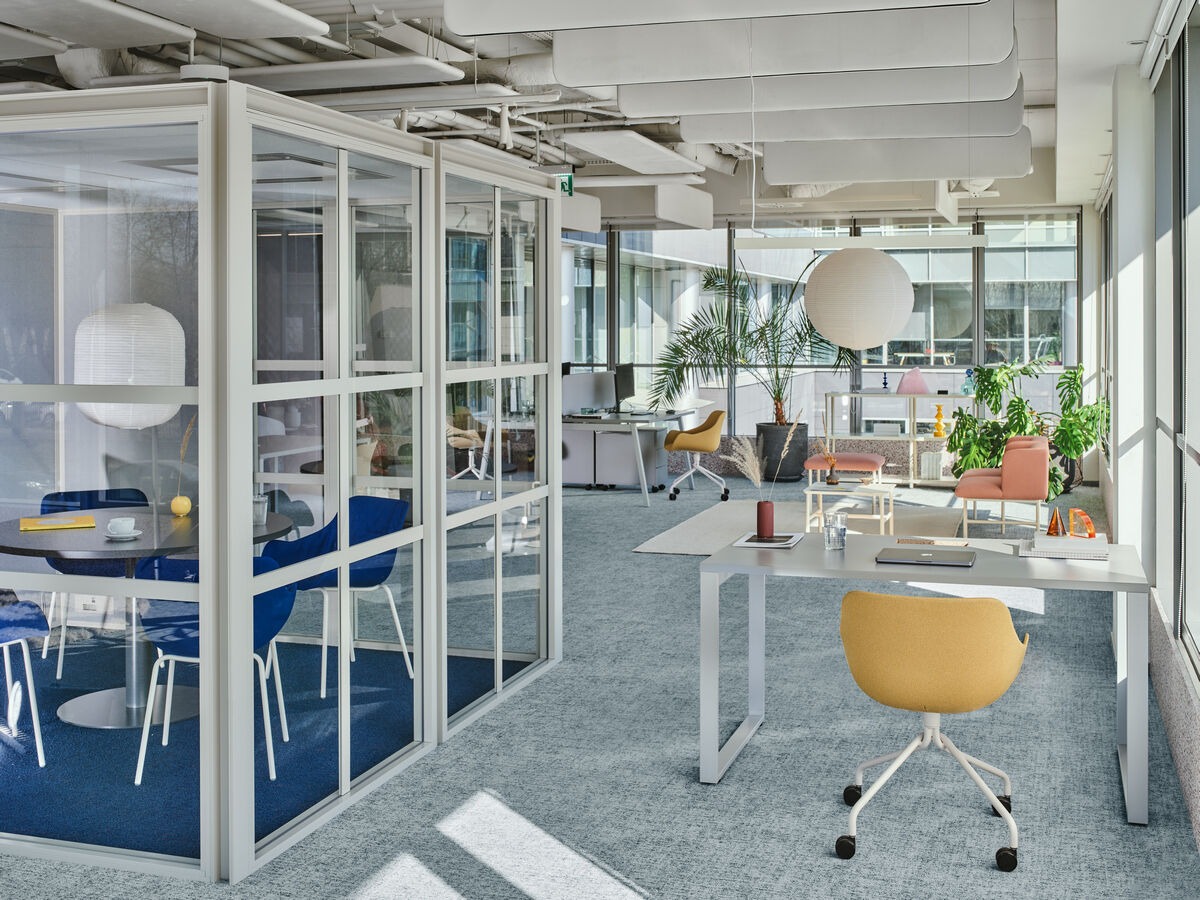
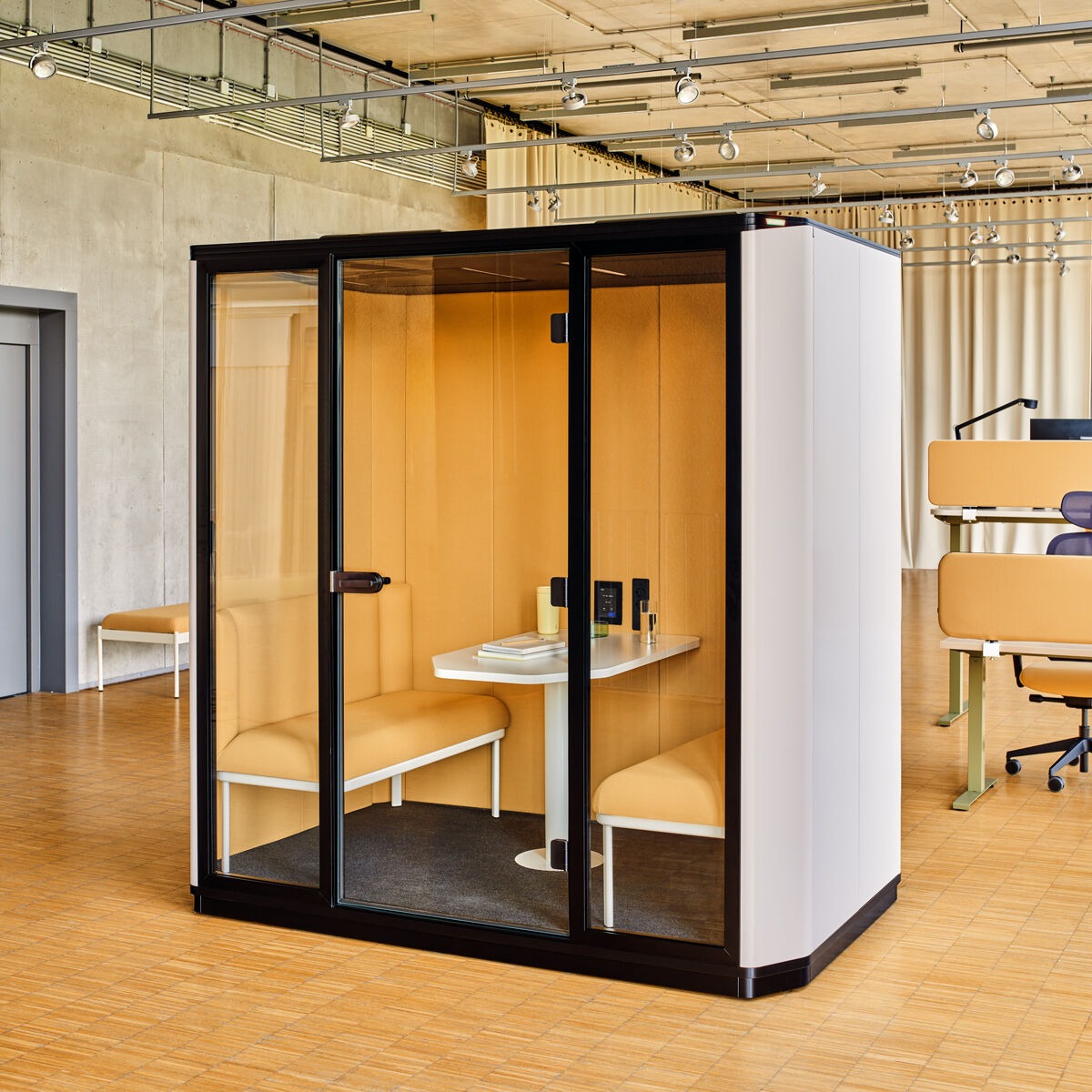
These larger booths, such as the Treehouse 4-person acoustic booth or hushMeet, are used for project meetings and brainstorming sessions and are an effective way to divide up space in an open-plan office, replacing less frequently used traditional conference rooms. An example of a larger unit is the 4-person Flathouse, with an approximate net price of PLN 58,414.00. Larger booths are a long-term investment as they usually require professional installation and relocation.
How to choose the right size of a booth for your office?
Your approach to purchasing should take into account an analysis of the amount of time employees spend on individual phone calls compared to quick team meetings. If the job profile is focused on high individual concentration (e.g. IT departments, programmers), excessive capital allocation to large 4-person cubicles will be inefficient. It is crucial to optimally match the size to the dominant activities in a given department.
It is good practice to conduct a study of the use of existing conference rooms and focused work rooms. Based on data on meeting frequency, number of participants and average session length, it is possible to calculate exactly how many cubicles of each size will be needed for optimal efficiency.
What design features enhance the appeal of acoustic booths?
Some manufacturers, such as Treehouse, incorporate biophilic design elements reminiscent of tree houses. This aesthetic aims to create a warm, cosy and safe environment, which, although not measurable by hard indicators, has a positive effect on the user's psychology and can increase acceptance and effectiveness of the booth, promoting creativity.
Design is particularly important in the context of internal marketing and building company culture. An acoustic booth that looks sophisticated and aesthetically pleasing will be more readily used by employees than a boring, grey metal box.
What should be included in the standard equipment of a sound booth?
The functionality of a booth is directly dependent on its equipment. Modern acoustic booths must be equipped with: electrical sockets (including USB), shelves or tabletops for laptops, efficient LED lighting and, critically, ventilation systems. These amenities increase comfort and enable effective, uninterrupted work.
There are many customisation options available, allowing the booth to be aesthetically integrated into the overall office design. Customisation includes the choice of casing type, upholstery colours and the use of special acoustic glass, which is a key element of sound insulation. Aesthetic elements are optional, but functional power and ventilation elements are absolutely critical.
Critical technical indicators: acoustics and ventilation
The decision to choose an acoustic booth should be based on hard technical data, not subjective feelings. The following indicators are key to assessing the real value and long-term functionality of the product.
What are sound insulation standards and what does speech reduction mean?
Acoustic performance must be confirmed by independent research and scientific centres. Manufacturers should be required to provide documentation referring to recognised international standards, such as PN-EN ISO 11957:2010 and PN-EN ISO 717-1:2013.
The key indicator is Speech Digestion (DS,A), measured in decibels (dB) in accordance with ISO 23351-1:2020. The DS,A value determines how effectively the booth attenuates speech inside, making it impossible to understand outside. The higher the DS,A value, the greater the confidentiality. Manufacturers often classify their products, for example as Class B in the context of ISO 23351, which implies that the required level of speech reduction has been achieved.
There is a significant discrepancy between laboratory results and operational reality. The acoustic performance of a booth is not constant and depends on the environment in which it is placed. A booth that has achieved a high acoustic rating in sterile test conditions may be rated lower in a real, noisy office environment. Therefore, it is essential to strategically locate booths away from main traffic routes and constant sources of noise, such as printers or noisy social areas.
How does the location of the booth affect its acoustic efficiency?
It is also worth noting that acoustics are inextricably linked to the quality of installation. Errors resulting from improper door alignment, incorrect seal installation or errors in the installation of the steel frame lead to reduced soundproofing. Purchasing a booth with the highest acoustic rating is pointless if it is not installed professionally.
The location of the booth in the office should be strategic: first, identify the noisiest areas (usually near the entrance, social areas, open-plan offices), and then place the booths in relatively quieter areas, if possible. In an ideal scenario, the booth should be located:
- away from main traffic routes,
- out of direct sight of noisy social areas,
- close to power sources,
- in a well-lit area (or one designed for lighting installation).
What is mechanical ventilation in acoustic booths and why is it important?
Since acoustic booths are designed as sealed, airtight structures that provide sound insulation, an efficient and effective ventilation system is essential for safety and comfort of use. Without proper ventilation, indoor air quality quickly deteriorates.
Polish hygiene standards for mechanically ventilated (or air-conditioned) non-smoking office spaces specify a minimum required fresh air supply of 20 to 30 m³/h per person. The ventilation system must be designed to ensure continuous air exchange, which is crucial for maintaining low carbon dioxide (CO₂) levels and preventing concentration levels from dropping.
Cabs based on gravity ventilation (offering less than 20 m³/h) are not recommended for use requiring prolonged concentration. If the cab effectively suppresses external noise but at the same time the CO₂ level inside rises, the worker's ability to concentrate drops sharply, negating the initial increase in productivity.
When budgeting for a purchase, it is recommended to choose models that exceed the minimum ventilation standards (preferably 30 m³/h per person) in order to ensure optimal conditions for long video conferences and focused work.
How does the noise level generated by the ventilation system affect the efficiency of the booth?
From a technical point of view, ideal sound insulation requires airtightness, which necessitates the use of an efficient yet quiet ventilation system. This system must operate in such a way as to maintain a slight negative pressure or neutral pressure in the booth, which minimises the risk of speech sound ‘escaping’ through potential structural leaks.
Verifying the noise level generated by the ventilation system itself is just as important as reducing external noise. Many booths have built-in fans, which can generate noise levels of 40-50 dB, negating some of the benefits of sound insulation. Manufacturers should provide specifications for ventilation noise levels, which should not exceed 35 dB for optimal comfort.
Table 1: Critical acoustic and ventilation standards
| Technical indicator | Reference standard | Unit/measurement | Operational significance | Minimum required value | ||||||||||||||||||||||||||||||
| Speech reduction index (DS,A) | ISO 23351-1:2020 | dB | Confidentiality of conversations; degree of isolation from external speech | Class B (or > 30 dB) | ||||||||||||||||||||||||||||||
| Air exchange (ventilation) | Hygiene standards | m³/h per person | Maintaining low CO₂, thermal comfort, concentration | 20 – 30 m³/h (mechanical ventilation) | ||||||||||||||||||||||||||||||
| Ventilation noise | Manufacturer's specification | dB | No negation of insulation by internal noise | Maximum 35 dB | ||||||||||||||||||||||||||||||
| Acoustic certification | PN-EN ISO 11957:2010 | Test confirmation | Verification of independent laboratory tests | Confirmation by laboratory tests | ||||||||||||||||||||||||||||||
| Installation requirements | Manufacturer's warranty | Authorisation | Validity of warranty and maintenance of technical parameters | Authorised installation only
From a technical point of view, ideal sound insulation requires airtightness, which necessitates the use of an efficient yet quiet ventilation system. This system must operate in such a way as to maintain a slight negative pressure or neutral pressure in the booth, which minimises the risk of speech sound ‘escaping’ through potential structural leaks. Verifying the noise level generated by the ventilation system itself is just as important as reducing external noise. Many booths have built-in fans, which can generate noise levels of 40-50 dB, negating some of the benefits of sound insulation. Manufacturers should provide specifications for ventilation noise levels, which should not exceed 35 dB for optimal comfort. Table 1: Critical acoustic and ventilation standards
|
Logistics, warranty and TCO (Total Cost of Ownership)
The total cost of ownership (TCO) of an acoustic booth is strongly linked to installation logistics, warranty and mobility.

Why is authorised assembly crucial for quality?
Professional installation is absolutely crucial to achieving the declared soundproofing, stability and safety of the cubicle. Errors resulting from incorrect door alignment, incorrect seal installation or errors in the installation of the steel frame can not only hinder use, but above all reduce durability and original acoustic parameters.
For this reason, many manufacturers make an extended warranty conditional on installation by an authorised team. A professional installation team is trained in the specifics of the product, which allows for installation in accordance with the manufacturer's guidelines. This is the only way to ensure that the booth will perform in accordance with the acoustic parameters declared in laboratory tests.
Attempting to install the booth yourself (in order to reduce costs) is considered a high financial risk. In order to protect your investment and ensure that the parameters in accordance with ISO 23351 are maintained, the cost of authorised installation, whether included in the purchase price or as an additional service, should be treated as a mandatory part of the TCO.
What are the service and maintenance requirements for acoustic booths?
When contracting services, it is also important to ensure that regular servicing and inspection of seals and doors is provided. These components are subject to natural wear and tear in heavily used offices, and their degradation can reduce the original soundproofing after a few years.
Regular maintenance is an investment that extends the life of the booth and keeps its acoustic parameters at an optimal level. It is recommended to:
- inspect the seals every 12-18 months,
- clean the glass elements and casing every month,
- test the ventilation system every 6 months,
- check the door mechanism and hinges every 12 months.
How does booth mobility affect relocation costs?
Office space flexibility is becoming increasingly important. The mobility of acoustic booths falls into two categories. Smaller models (e.g. Phone Booths) are often equipped with castors, allowing for easy relocation without the need for disassembly.
Larger booths, such as hushMeet.L, usually need to be dismantled into individual modules before relocation. Although the modular design may be simple, this task is usually entrusted to qualified teams due to the weight and complexity involved. High-growth companies or those that frequently change their office layout should prefer models that are as mobile as possible. Avoiding the costly and time-consuming operation of dismantling and re-authorised assembly of a large booth with each office layout change significantly reduces future operating costs.
Commercial analysis and financial justification
What are the estimated costs of acoustic booths?
The prices of acoustic booths depend on their size, acoustic class, equipment and brand. Market analysis shows significant price differences between units. Examples of approximate gross prices for selected models:
- 2-person booth (e.g. Treehouse TH 2): approx. PLN 20,243.34
- 4-person booth (e.g. Flathouse FH 4 G1): approx. PLN 71,849.22
Please note that the prices quoted are indicative and subject to individual negotiation. The final price is influenced by the quantity of the product ordered (economies of scale), the degree of customisation (colours, upholstery, accessories) and any additional services, such as the aforementioned installation.
How to negotiate the price and get the best deal?
Before making a decision, it is essential to take advantage of the individual quotation option. During the negotiation process, the Facility Manager should request a detailed breakdown of costs: separately for the product, transport and the mandatory cost of authorised installation, in order to budget the TCO correctly. Suppliers often offer competitive prices for larger orders, tailored to the specifics of the project.
Negotiation strategies:
- obtain quotes from at least 3 manufacturers,
- request a detailed breakdown of costs (product, installation, transport, service),
- ask for discounts for larger orders (economies of scale),
- negotiate the warranty period and service conditions,
- ask about the possibility of a pilot implementation
Table 2: Classification of acoustic booths, application and TCO criteria
| Booth Type | Number of People | Key Activity | Approximate Role in the Office | Selection Criteria | Critical TCO Implications |
| Phone Booth |
1 |
Focus/Private calls | Suppression of minor noise, Deep Work | Ventilation 30 m³/h/person | High mobility, low unit cost of relocation |
| Meeting Pod (small) |
2 |
1:1, Video conferencing | Mini-conference zone | DS,A Class B (ISO 23351) | Good mobility, average relocation TCO |
| Meeting Pod (large) |
4+ |
Teamwork / brainstorming | Replacement for a small conference room | Authorised installation required | Low mobility, high relocation TCO (disassembly required) |
Final recommendations and implementation strategy

How to conduct a proper noise audit before purchasing a booth?
Investing in office acoustics should be implemented in stages to ensure maximum success and user acceptance. The first step is to conduct a noise audit in the office.
The audit should include:
- objective measurements: measure the noise level in decibels (dB) in different areas of the office using a sound level meter. Identify ‘hotspots’ - the noisiest areas;
- employee surveys: conduct satisfaction surveys, asking employees about noise levels, its sources and its impact on productivity;
- behavioural observation: observe where employees seek peace and quiet – do they go to auxiliary rooms or work from home?
- work analysis: identify the types of work that require maximum concentration (programming, design, writing).
What is a practical approach to implementing acoustic booths?
It is recommended to implement a pilot booth (or set of booths) in the noisiest section of an open-plan office. Next, both objective acoustic measurements in a real working environment (confirming that the DS,A parameters are close to those declared) and subjective surveys of employee satisfaction and well-being should be carried out.
The pilot phase should last at least 4 weeks and should include:
- collecting data on usage (how many people per day, for how long),
- noise measurements before and after (to compare actual parameters),
- employee satisfaction surveys,
- identification of operational issues.
How to educate employees about the functions of the booth?
The function of the booth should be clearly communicated to employees – it is a tool for noise reduction and private conversations, which reinforces a culture of confidentiality. Eliminating the common myth about achieving absolute silence is key to avoiding disappointment and ensuring that the booths are used effectively for their intended purpose.
The educational programme should include:
- introductory workshops: presentation of functions, acoustic parameters and practical guidelines;
- posters and materials: information on booking, etiquette for using the booth;
- booking system: if the booth is shared, implement a booking system (calendar);
- incentives: promote the use of the booth in internal marketing;
- feedback loop: collect user feedback after one month.
What indicators should be tracked to assess the success of the investment?
After the booths have been implemented, tracking specific indicators will help assess the success of the investment:
| Indicator | Definition | Target | Frequency of measurement |
| Utilisation rate | % of time when the booth is occupied / possible operating time | > 60% | Weekly |
| User satisfaction | Average rating from surveys (1-10) | > 7.5 | Monthly |
| Noise reduction (measurements) | Decrease in dB level in open space | > 5 dB | Monthly (after 1, 3, 6 months) |
| Productivity | Managers' opinion on team performance | Visible improvement | Quarterly |
| Sick leave | Number of days of absence per employee | Reduction | Quarterly |