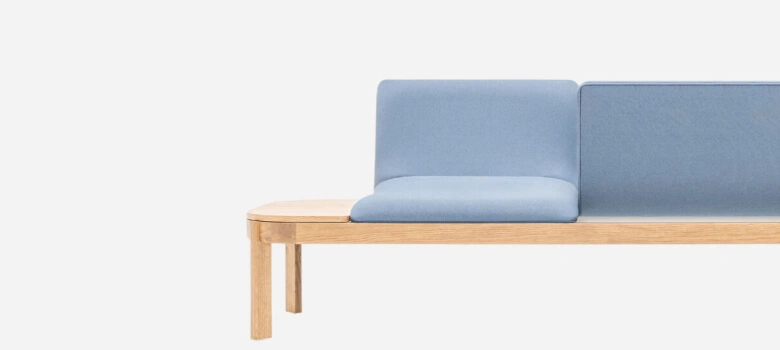
High stools as a part of a modern office strategy (activity-based working, ABW)
Contemporary offices are increasingly moving away from rigid open-space structures in favour of working environments based on flexibility and diversity. In the activity-based working (ABW) model, every piece of equipment takes on strategic importance — including bar stools, which combine functionality with a new approach to teamwork and communication. They are no longer just seats, but a symbol of cultural change in the way we think about office space.
The context of office space transformation: from better open space to flexible layout
The evolution of the traditional open-plan office concept has led to the creation of spaces designed according to the activity-based working (ABW) model, which focuses on flexibility, diversity of zones and the use of advanced technologies. In this context, bar stools are no longer treated solely as bar or catering furniture, but have become a strategic tool supporting the dynamics of work. Modern offices without assigned workstations are increasingly becoming the norm, as they offer better use of space and support for diverse working styles, from quiet zones to areas for collaboration and creativity.
The introduction of bar stools into formal and informal office areas is a physical indicator of cultural transformation within a company. Replacing the rigour of assigned workstations with flexible, high seating (traditionally associated with relaxation and social interaction) signals a formal transition to a work model based on spontaneous communication and the exchange of ideas. This minimises employee resistance to change, increasing acceptance of the office as a dynamic and task-oriented space. The most important benefits include support for collaboration, greater comfort and increased productivity resulting from ergonomic solutions.
Current design trends place a strong emphasis on task-oriented design. Workplaces are designed to precisely meet the needs of the tasks performed, which promotes employee autonomy. Due to their specific height and limited comfort for prolonged sitting (compared to fully adjustable office chairs), stools are naturally suited to short, focused activities. They are a tool for promoting the rapid exchange of information rather than lengthy deliberation, thus subtly managing the dynamics and duration of meetings.
The psychology of height and its impact on interactions
The high seating position provided by bar stools has a direct impact on the quality of interpersonal interactions in the office. It facilitates the transition from sitting to standing and minimises physical barriers, which in turn promotes spontaneous communication and the exchange of ideas. Teams that use shared areas equipped with high tables and bar stools are more likely to interact with each other, which directly supports collaboration and creativity, as well as encouraging quick consultations and brainstorming.
Conversation areas, where bar stools are often used, are a key element in building a sense of belonging and community in the office. The role of community belonging in the workplace is growing, reflecting the need to strengthen interpersonal bonds in the work environment. Modern offices that offer ergonomic solutions and comfortable furniture, including appropriately selected bar stools, have a positive impact on the overall well-being and efficiency of teams.
Practical application of high stools: identification of target areas and functional requirements
High stools work well in a variety of office areas, provided that their functionality is adapted to their specific purpose and expected usage time.
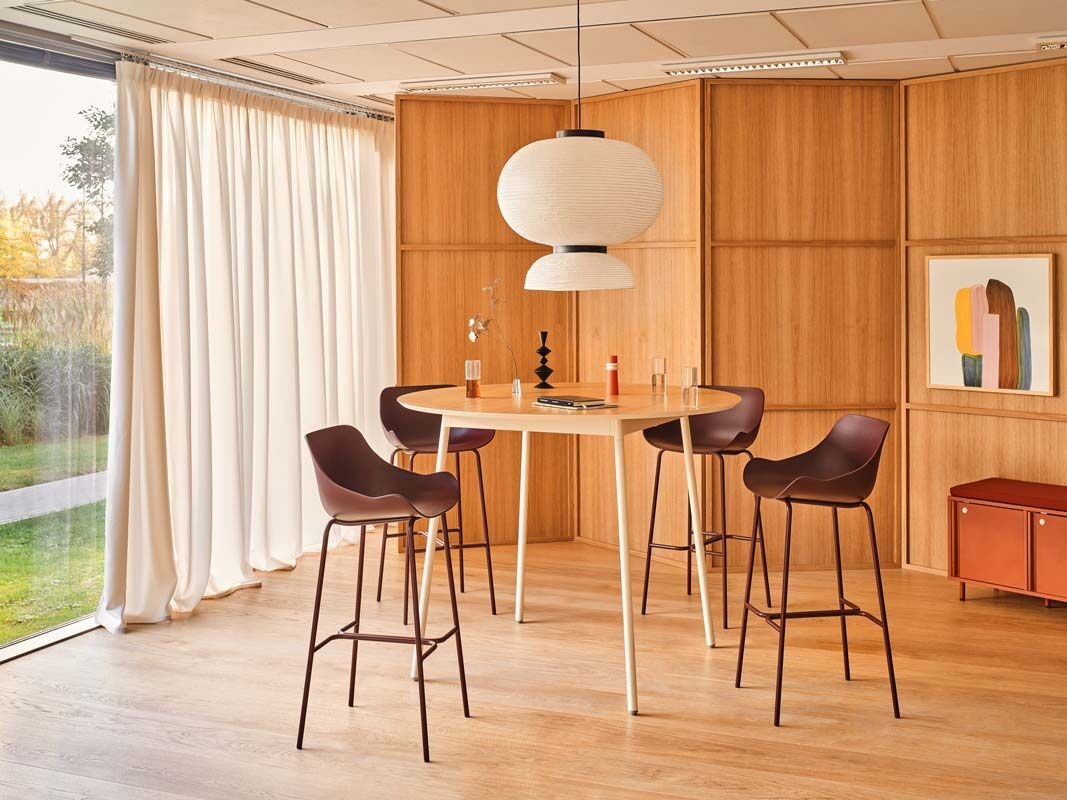
Social and chillout areas (buffets, staff kitchens)
In staff kitchens and buffets, bar stools are inextricably linked to the dining area and often replace traditional tables and chairs in places where space is limited. Combined with a high counter or table, bar stools effectively create a café-style niche or bar.
In chillout areas, bar stools can serve as additional places to relax with a cup of coffee, read or hold informal meetings. In these areas, more lifestyle-oriented models are acceptable, using wood, upholstery, leather or eco-leather. Due to frequent contact with food and liquids, high material resistance and ease of cleaning are a priority in these areas.
There is a strategic difference in comfort requirements depending on the intended use. Bar stools designed for buffets or kitchens, where the time of use usually does not exceed 15 minutes, can be simple, often without a backrest. This simplicity of design facilitates cleaning and allows the furniture to be completely slid under the countertop, which is key to optimising space.
Quick meeting and hot desking areas (huddle rooms)
High stools are extremely effective in designating quick meeting and consultation areas, known as huddle rooms. They are ideal where quick consultation is required, often using a multimedia station.
Flexibility in arrangement is essential in these dynamic areas. The lightweight construction of the stools and the ability to easily move them around allow for quick reconfiguration of seating depending on the current needs of the team. In huddle rooms or hot desking areas, where sitting time can range from 30 to 60 minutes, minimal but assured comfort is required. Models should have an upholstered seat and often a lower backrest as well.
In meeting areas, functionality is enhanced if the furniture is swivel and height-adjustable. Swivel stools facilitate interaction and quick engagement in conversation. However, when selecting models for these areas, decision-makers must balance maximum comfort (models with full backrests and armrests) with space optimisation. Although models with backrests are more comfortable and provide greater support, they take up more space and cannot be completely slid under the table. The priority in huddle rooms is comfort for the duration of the meeting, while in the buffet area, ease of arrangement and cleanliness are key.
High stools as flexible decorative accents

Ergonomics and dimensions — precise guidelines for user comfort and health

The fundamental principle of height adjustment (the 30 cm rule)
The key principle for ensuring seating comfort is the optimal difference between the height of the tabletop and the height of the stool seat, which should be approximately 30 cm. This space provides sufficient freedom of movement for the legs and arms, allowing the forearms to rest comfortably on the tabletop.
The precise dimensional guidelines for office tabletops and shared areas are as follows:
- for a standard tabletop height of 90 cm (often found in lower kitchen islands), the bar stool should have a seat height of 60-65 cm;
- for 100 cm high desktops (popular in quick meeting areas), a stool height of 70-75 cm is recommended;
- for very high bars or buffets with a height of 110-120 cm, the stool should be 80-90 cm high.
The varying heights of users should also be taken into account. Standard, fixed dimensions will not suit all employees. For shorter people (under 165 cm), bar stools with a height of 60-70 cm will be suitable, while taller people (over 180 cm) will need a height of 80-90 cm. This means that in a multi-user environment (abw, hot desking), height adjustment (gas or mechanical) is essential to ensure inclusivity and optimal comfort for every employee.
| Tabletop height (h) [cm] | Type of office space | Recommended seat height (s) [cm] | Ergonomic standard (h-s) |
|
80-90 |
low island/bar in the staff kitchen |
55-65 |
~25-30 cm |
|
90-100 |
high table for quick meetings (huddle table) |
60-75 |
~25-30 cm |
|
110-120 |
high bar/buffet in the chillout area/café |
80-90 |
~30 cm |
Footrest, an essential for ergonomics
A high seat cannot be ergonomic without a sturdy footrest. It corrects the body's posture, relieves pressure on the feet and thus supports the lower spine. A footrest is absolutely essential for comfort, especially with high islands.
In terms of health prevention, a footrest is the antidote to tired legs resulting from prolonged sitting. The use of a footrest is crucial for shorter people who cannot fully rest their feet on the floor when adjusting their chair or desk. In situations where a stool is used for more than 15 minutes (e.g. during a meeting), the lack of a footrest becomes a serious ergonomic problem, leading to pressure on the thighs and circulation problems. In a commercial environment, a footrest should be treated as a mandatory health prevention standard, not an optional accessory.
Additional functionality and structural stability
In addition to dimensions and footrests, additional functionalities are also important. In meeting and collaboration areas, swivel seats greatly facilitate interaction and allow users to easily turn to different points in the room.
Structural stability is critical for safety and comfort, especially in a dynamic office environment. Four-legged models are considered the most comfortable and stable, making them the recommended choice for most office applications. Single-leg (column) stools, although often height-adjustable, tend to be more unstable and less practical, requiring a solid, weighted base. Individual variants can be retrofitted with armrests or a lower backrest, which increases comfort during longer meetings.
Material specifications and durability requirements (commercial grade)
The durability of office furniture, especially that used intensively in common areas, is crucial for reducing the total cost of ownership (TCO). The choice of materials must be supported by rigorous testing to ensure their longevity.
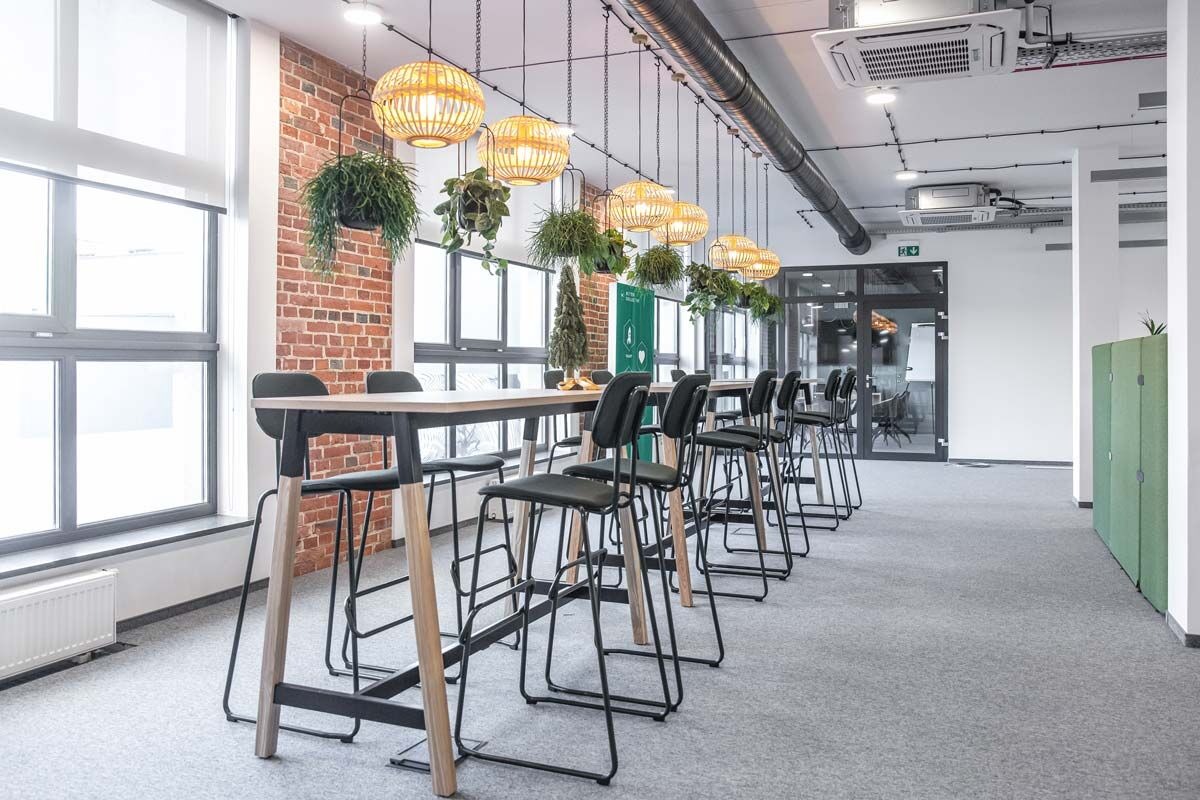
Abrasion resistance standards: Martindale test
The basic measure of upholstery durability is the Martindale test, which determines the fabric's resistance to abrasion. The result of this test is crucial when selecting furniture for commercial spaces with high traffic.
The requirements for furniture in an office environment are significantly higher than for home furniture:
- standard office chairs and armchairs require a minimum resistance of 30,000 - 40,000 Martindale cycles;
- bar stools in areas of very intensive use, such as frequently visited buffets, waiting rooms or huddle rooms used by many employees, should be equipped with upholstery with a resistance of 40,000 cycles or higher, preferably reaching 100,000 cycles or more.
It should be remembered that a low Martindale rating (e.g. below 30,000) leads to rapid wear and tear, which negatively affects the company's image and the perception of its care for employee comfort. Therefore, investing in higher material resistance is an investment in the long-term quality of the office. In addition to abrasion resistance, attention should be paid to fabric thickness, pilling test results and colour fastness to light.
| Level of intensity of use | Type of office area (example) | Recommended number of Martindale cycles | Strategic justification |
| moderate (domestic standard) | executive offices, very occasional use |
20 000 - 30 000 |
minimum for offices, not recommended in common areas |
| intensive standard | chillout areas, general office chairs |
30 000 - 40 000 |
typical requirement for office furniture, ensures good durability |
| very intensive (heavy duty) | high-traffic kitchen islands, non-stop huddle rooms |
40 000 - 100 000+ |
maximises TCO and resistance to rapid wear and tear |
Material selection and maintenance
The choice of upholstery material is often a compromise between aesthetics and functionality. Luxury materials such as velour (used in glamour style) are visually appealing, but can be difficult to keep clean in areas prone to staining (kitchen, buffet).
In dining areas and areas of intensive use, materials that can be cleaned quickly and easily are preferred. These include durable synthetics, eco-leather or leather, as well as structures made of natural materials (wood, metal) that can be wiped down. In addition to choosing the right material, it is essential to implement a regular maintenance system. Regular and immediate stain removal is necessary to avoid permanent soiling and extend the life of the furniture.
Design, aesthetics and corporate image
High stools are an important tool for strengthening a company's visual identity and are a mobile accent that can enhance the aesthetics of a space.
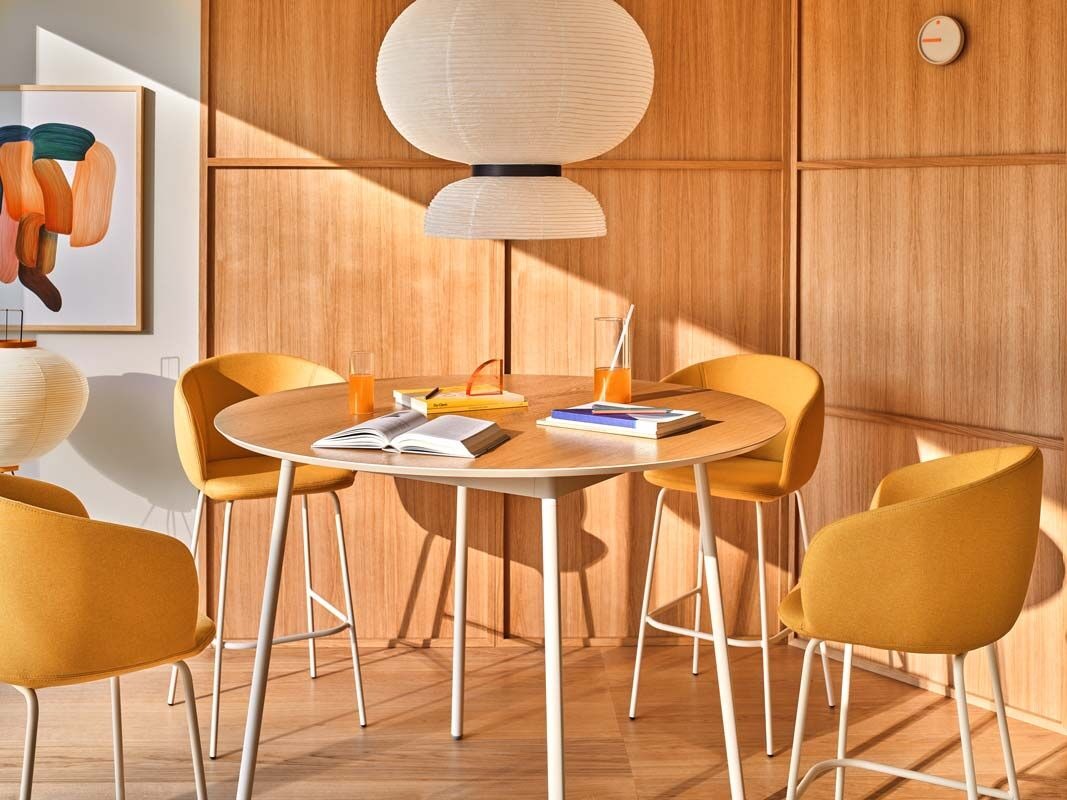
Stylistic consistency and choice of materials
The choice of specific stool models (shape, colour, size) should be dictated by their subsequent use and must harmonise with the dominant style of the interior.
Industrial/loft style: models combining metal and wood fit perfectly into this style. Bar stools with metal bases work well in austere, minimalist loft arrangements, but they can also be a contrasting element, breaking up the classic style of the interior.
Scandinavian style: characterised by simplicity and functionality. In this case, bar stools made of natural materials (wood, rattan) with a minimalist design and light colours (white, grey) are preferred.
Glamour/New York style: requires furniture that attracts attention and sparkles. Glamour-style bar stools, often upholstered in velour, with quilting or silver finishes, can be a luxurious but practical decorative accent, blending well with marble and glass.
A bar stool can serve as an easy and quick tool for ‘soft’ interior design, allowing you to introduce a distinctive style (e.g. Italian design) without the need for a costly renovation of the entire space.
Colours and brand image
Colour is a powerful branding tool. Bar stools can become a focal point of decoration, and intense colours can enliven a neutral space. When choosing colours, make sure that they complement the dominant colour palette in the office or provide a deliberate, contrasting accent that reinforces the corporate identity (CI).
To maintain visual consistency in an office divided into multiple zones (from formal to chillout), it is recommended to find products with a similar basic design but available in different variants (e.g. low and high versions, with and without backrests). This makes it easier to match furniture to different activities while maintaining a uniform character of the interior design. However, care should be taken to ensure that overly massive, armchair-style bar stools do not visually clutter small rooms. In such cases, slim, open structures are recommended, which minimise the impression of heaviness and maximise the feeling of spaciousness.
Summary and checklist for decision-makers (essential purchasing decisions)
Choosing the perfect stool for a modern office requires a strategic approach that balances rigorous ergonomic standards, commercial grade durability and aesthetic alignment with the company's image. Stools are an investment in flexibility and spontaneity of interaction in an ABW environment.
| Criteria | Expert guideline | Justification |
| Seat height | 25-30 cm difference between the tabletop and the seat | correct posture and ergonomics |
| Height adjustment | highly recommended in shared areas | ensuring inclusivity for people of different heights |
| Footrest | integrated, sturdy – health requirement | supports circulation and spine, especially for shorter people |
| Upholstery durability | min. 40,000 Martindale cycles (100k+ in buffets) | low TCO and resistance to intensive use |
| Stability | four-legged models preferred | maximising safety and structural reliability |
| Additional functionality | backrest and swivel seat in meeting areas | increasing comfort and facilitating interaction in huddle rooms |
| Style/image | matching the company's aesthetics (e.g. industrial, glamour) | strengthening the brand and design |
Care and maintenance tips (post-purchase)
To ensure maximum longevity of bar stools, regular and systematic maintenance is required, especially in areas of intensive use such as buffets. The stability of the structure, including height adjustment mechanisms and rotating elements, should be checked periodically.
With regard to upholstery, regular stain removal is essential, especially in catering areas, to prevent dirt from permanently penetrating the fabric structure. Keeping furniture in good condition directly translates into a positive image for the company and long-term economic benefits.